

The Oasis We Choose to Build
Recently, I set out to visit a friend.
I typed “Lift for Life” into my GPS and arrived at Lift for Life Academy, housed in what was once a bank building on South Broadway. The security officer smiled as soon as I mentioned my friend, Rene Knott. He explained something I didn’t know: Lift for Life Academy and Lift for Life Gym share common roots, but they’ve traveled separate paths for many years. Before I left, he graciously offered me a tour of the school.
Then I drove north. The trip from the Academy to Lift for Life Gym is only about three and a half miles, yet it feels much farther because of what changes along the way.
As I wound through the back streets of North St. Louis, I was struck by the number of people gathered near the old Greyhound station and by the vacant buildings that have become so common in parts of our city. When I arrived at the gym, there was nothing flashy about it. Just a modest building on Cass Avenue, easy to miss if you didn’t know what was happening inside.
Inside, however, was something extraordinary.
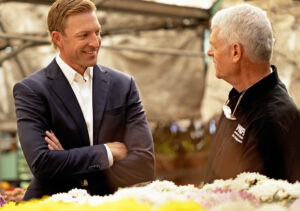
The CEO quietly pointed toward the neighborhood surrounding the building. He explained that many of the people I had seen were part of one of the city’s largest homeless encampments. He spoke about discarded syringes, the daily realities his staff navigates, and the responsibility they feel to create a safe place for children in the middle of difficult circumstances.
Then the children started introducing themselves. One young man proudly told me he had lost nearly forty pounds. Another shared how much he had improved since joining the powerlifting team. A young girl, still years away from adulthood, confidently talked about preparing for her next competition.
They weren’t simply learning how to lift weights. They were learning discipline, confidence, friendship, nutrition, teamwork, and what it feels like when an adult believes in you. Their eyes said something before their words ever could. Hope had found an address.
Watching those young people transported me back decades to St. Edward’s Catholic Church on the north side of St. Louis. As a young boy, their summer work program became one of the places that kept me off the streets. It wasn’t glamorous. No one would have confused it for a world-class facility. But it was an oasis.
Someone had decided that children like me deserved a place where we could be safe, challenged, encouraged, and seen. Standing inside Lift for Life Gym, I realized I was standing in another oasis.
That word stayed with me as I drove away. As leaders, we sometimes become overwhelmed by the sheer magnitude of need around us. Every neighborhood has another nonprofit. Every cause has another worthy mission. Every day presents another request for support.
If we’re not careful, the size of the problem convinces us that our contribution won’t matter. I’ve learned the opposite. None of us is responsible for solving every problem in St. Louis. But every one of us is responsible for helping build an oasis somewhere.
Business leaders often ask me where they should invest their time, talent, or capital. My answer is increasingly simple: find an organization creating an oasis and help make it stronger.
It may be a school.
It may be a neighborhood nonprofit.
It may be a workforce development program.
It may be a church.
It may be a youth sports organization.
What matters is that somewhere, someone is creating the conditions for another human being to flourish. That’s what I witnessed at Lift for Life Gym.
The lesson extends well beyond one organization. Economic development isn’t only measured in cranes, construction projects, and quarterly GDP. Those matter. But lasting prosperity is also measured by whether a twelve-year-old believes tomorrow can be better than today.
Whether a teenager has a mentor.
Whether a child has a safe place to spend the afternoon instead of the street.
Whether someone looks them in the eye and says, “I believe in you.”
Those are investments too.
In banking, we often talk about capital. Financial capital is important. But there is another kind of capital that communities either accumulate or lose: relational capital. Trust. Belonging. Hope. Opportunity. These are assets that compound over generations.
Every healthy city depends on institutions willing to build them.
As I left that afternoon, I realized I didn’t have to carry the weight of every need I had witnessed. I simply needed to do my part. Many hands really do make light work. Perhaps that’s the invitation for all of us.
Don’t wait until you can solve everything.
Find an oasis. Strengthen it.
Then trust that, together, enough ordinary people making faithful investments in extraordinary places can change the trajectory of a city.
It Matters Where You Bank®
Originally published in the St. Louis Business Journal in August of 2026 by Orvin T. Kimbrough, Chairman and CEO at Midwest BankCentre.